
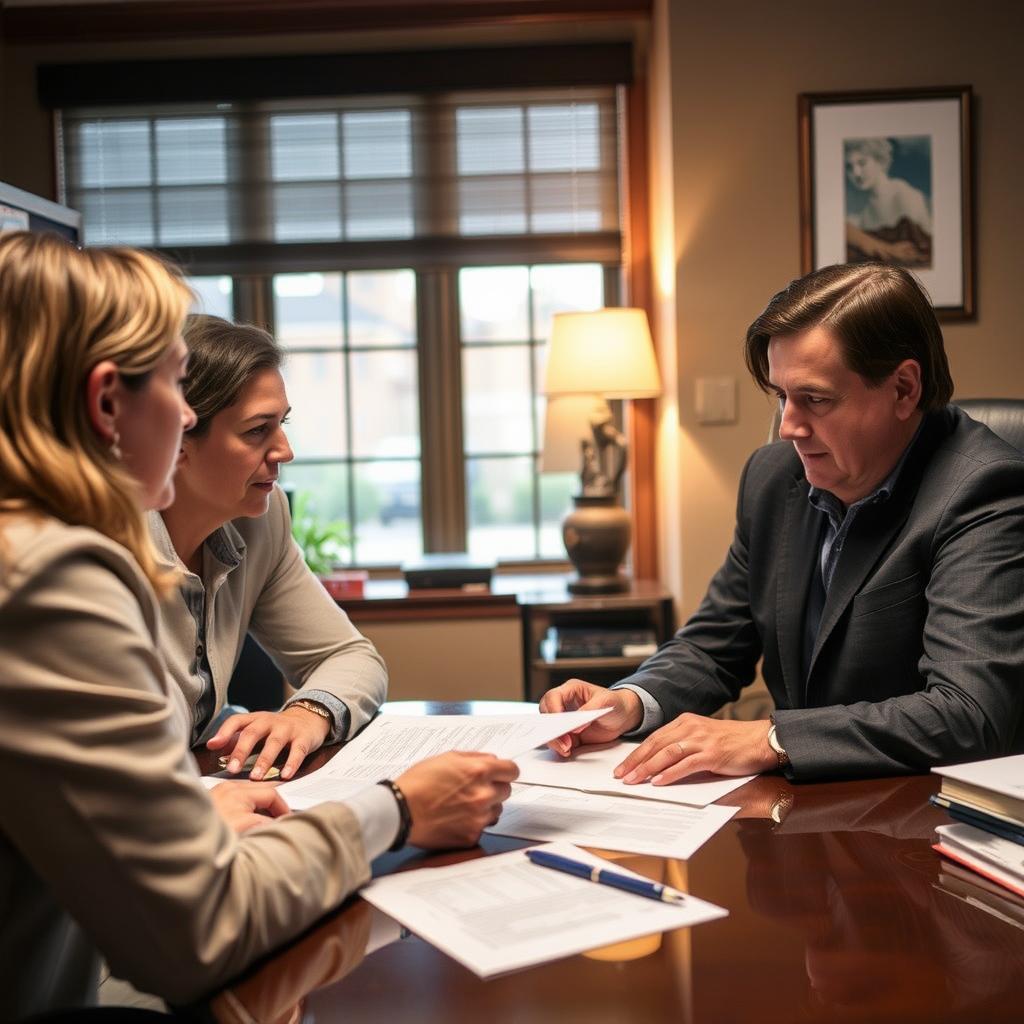
Settlement Agreement Lawyer Allegany County, NY
When a settlement agreement meant to resolve a dispute is itself breached or challenged, you need a clear path forward. In Allegany County, New York, settlement agreements are contracts, and their enforcement falls under New York contract law. Mr. Sris, Owner and Founder of Law Offices Of SRIS, P.C., and his Of Counsel team represent clients in Allegany County who face breached settlement agreements, disputes over agreement terms, or enforcement actions. Whether you are trying to hold another party to a signed settlement or defending against a claim that a settlement is invalid, experienced multi-state attorneys can evaluate your situation and advise on the most appropriate next steps. Our New York location serves communities throughout Allegany County, including Allegany, Wellsville, Belmont, and surrounding areas. To request a consultation about a settlement agreement matter, call (888) 437-7747. Law Offices Of SRIS, P.C. – Advocacy Without Borders.
Enforcing or Defending Settlement Agreements in Allegany County
Settlement agreements are powerful tools for resolving business, employment, personal injury, and other disputes without proceeding to trial. In New York, a settlement agreement is a contract; it is governed by the same principles of offer, acceptance, consideration, and mutual assent as any other contract. When both sides perform as agreed, the matter ends. When one party fails to uphold its end—by not paying the agreed amount, by continuing a lawsuit that was supposed to be dismissed, or by violating a confidentiality or non-disparagement provision—the injured party may seek enforcement through the courts.
In Allegany County, enforcement actions for settlement agreement breaches are typically brought in the New York Supreme Court, Allegany County, located in Belmont. Mr. Sris and his Of Counsel can guide you through the process of filing a complaint for breach of contract, seeking damages, or, in appropriate cases, asking the court for specific performance to compel the other side to follow through with the settlement. Much of the work involves reviewing the written agreement, examining the conduct of both parties, and determining whether any defenses—such as fraud, duress, or mutual mistake—apply. The firm works to resolve these matters efficiently, whether through negotiation, mediation, or litigation.
Frequently Asked Questions
What is a settlement agreement in New York?
A settlement agreement is a legally enforceable contract through which parties resolve a dispute, often avoiding trial. In New York, these agreements must meet the basic contract requirements: offer, acceptance, and consideration. They may be reached at any point in a civil case—before a lawsuit is filed, during litigation, or even after a verdict. Once the agreement is signed and mutually agreed upon, the parties are bound by its terms. If one side fails to honor the settlement, the other may bring a breach of contract action. The written document should clearly define the obligations of each party, such as payment amounts, release of claims, and confidentiality provisions.
What happens if someone breaches a settlement agreement in Allegany County?
If a party fails to comply with a settlement agreement, the other party can file a breach of contract lawsuit in the New York Supreme Court, Allegany County. The non-breaching party seeks a court order enforcing the agreement or awards damages resulting from the breach. Common breaches include failure to pay the settlement amount, failure to dismiss a lawsuit, or violation of non-disclosure terms. Because a settlement agreement is a contract, the remedies available are those available under New York contract law, such as compensatory damages or, in limited circumstances, specific performance. Consulting an experienced attorney early can help assess whether the agreement is enforceable and what remedies apply.
What if the other party fails to pay under a settlement agreement?
If a party fails to make a required payment, you can bring a breach of contract claim seeking the amount owed plus applicable interest and possibly attorney fees if the agreement so provides. A settlement payment is a contractual debt. The simplest enforcement method is a demand letter, followed by litigation if the breach continues. In Allegany County, the lawsuit is filed in Supreme Court unless the amount in dispute falls within a lower court’s monetary jurisdiction. Our firm reviews the agreement, documents the nonpayment, and advises on the most appropriate strategy—whether negotiating a new payment schedule, moving directly to litigation, or seeking a judgment that can be enforced through asset discovery and collection mechanisms.
Can a verbal settlement agreement be enforced in New York?
Generally, verbal settlement agreements are enforceable in New York if the essential contract elements are present, but proving the terms can be more difficult. New York’s statute of frauds requires certain agreements to be in writing, such as those involving real property or agreements that cannot be performed within one year. Most dispute settlements, however, do not necessarily require a writing to be binding. The challenge is evidentiary—the party seeking to enforce an oral settlement must prove the terms and mutual assent. Written settlement agreements are far easier to enforce. Whenever possible, our firm recommends that any settlement be memorialized in a signed writing to avoid disputes over what was actually agreed.
What is the statute of limitations for breach of a settlement agreement in New York?
A six-year statute of limitations generally applies to breach of a written settlement agreement, starting when the breach occurs. New York CPLR § 213(2) governs contract actions, including settlement agreement breaches. For oral agreements, the same six-year period applies under CPLR § 213(2). Because the clock starts running at the time of breach—such as a missed payment—you should act promptly once you suspect non-performance. Even if the underlying dispute had its own shorter limitations period, the settlement agreement stands as an independent contract with its own limitations clock. To understand how the statute applies to your specific situation, reach Law Offices Of SRIS, P.C. at (888) 437-7747.
Can a settlement agreement be contested on grounds of fraud or duress?
Yes, a party may seek to set aside a settlement agreement by proving fraud, duress, mutual mistake, or other contract defenses. While New York courts favor settlement and rarely disturb them, a party that entered into an agreement through fraudulent misrepresentations or under impermissible pressure can raise these defenses. The burden is on the party challenging the agreement to present clear and convincing evidence. Common scenarios include one party hiding material facts during negotiations or threatening harm to force a signature. An attorney from our firm can review the circumstances of your agreement and help determine whether a viable challenge exists.
How are settlement agreements enforced in New York courts?
Enforcement typically begins by filing a complaint for breach of contract in the appropriate court, stating the terms of the agreement, the breach, and the relief sought. In Allegany County, the action is brought in the Supreme Court. After filing, the opposing party is served with process and has a chance to answer. Discovery may follow, though many settlement enforcement cases resolve earlier through motion practice or renewed negotiation. The judge may award damages, order specific performance, or, where the original action was pending, enter the settlement as a court order enforceable by contempt. Our firm can handle each step, from drafting the complaint to presenting evidence at trial if necessary.
What should I bring to a consultation about a settlement dispute?
Bring a copy of the signed settlement agreement, all correspondence about the agreement, and any records showing the breach, such as bank statements or emails. Having the full paper trail helps our attorney assess the strength and enforceability of the agreement quickly. Also bring any related court documents if the settlement was reached during litigation. The more complete the record, the more targeted the advice can be. For a consultation about a settlement agreement matter in Allegany County, contact Law Offices Of SRIS, P.C. at (888) 437-7747.
How do I find a settlement agreement lawyer near me in Allegany County?
You can contact Law Offices Of SRIS, P.C. at (888) 437-7747 to speak with Mr. Sris or his Of Counsel about your settlement agreement matter. Our firm represents clients throughout Allegany County, including in Belmont, Wellsville, and Allegany, from our New York location. Because we handle contract enforcement on both sides—plaintiff and defendant—we bring a balanced perspective. Scheduling a consultation allows you to discuss the facts of your case and learn about potential strategies for moving forward. We work with individuals and businesses, and we are available to discuss your matter in a confidential setting.
How does the process work for filing a breach of contract lawsuit in Allegany County Supreme Court?
The process begins with preparing and filing a summons and complaint, serving the defendant, and then proceeding through the litigation stages—answer, discovery, motions, and potentially trial. The timeline varies by case complexity and court scheduling. Allegany County Supreme Court, located at 7 Court Street in Belmont, handles contract disputes of this nature. Our firm has experience navigating the local court rules and can manage each phase, including settlement discussions that may resolve the matter before trial. For guidance on your specific situation, reach Law Offices Of SRIS, P.C. at (888) 437-7747.
How much does a settlement agreement lawyer cost in Allegany County?
Fees vary depending on the complexity of the matter and the amount at stake; our firm discusses fee structure during the initial consultation. Some settlement agreement disputes may be resolved with a few letters and phone calls, while others require full litigation. We work to be transparent about the likely costs and will discuss fee arrangements—such as hourly, flat-fee, or hybrid—aligned with the nature of the case. Because fees can depend on what the opposing side does, the early stages focus on identifying the most cost-effective path. Contact our firm to learn more about what your particular matter may involve.
About Mr. Sris and His Of Counsel Team
Mr. Sris, Owner and Founder of Law Offices Of SRIS, P.C., has been practicing since 1997. A former prosecutor, he is admitted in Virginia, Maryland, the District of Columbia, New Jersey, and New York. His Of Counsel team includes attorneys with significant experience in contract disputes and civil litigation. Together they bring substantial collective experience to settlement agreement matters across New York, including Allegany County. The firm’s approach focuses on practical solutions—enforcing valid agreements while defending clients against overreaching claims. For a consultation, reach Mr. Sris and his Of Counsel at (888) 437-7747.
Related pages:
Contract Lawyer New York County (Manhattan) |
Contract Lawyer Kings County (Brooklyn) |
Contract Lawyer Queens County (Queens) |
Contract Lawyer Richmond County (Staten Island) |
Contract Lawyer Nassau County (Long Island)
Primary sources:
New York CPLR § 213 |
New York State Unified Court System |
N.Y. C.P.L.R. § 213(2)
Attorney advertising. Prior results do not guarantee a similar outcome. Case results depend on a variety of factors unique to each case. Results may vary. Engaging Law Offices Of SRIS, P.C. Requires a signed engagement agreement. © 1997‑2026 Law Offices Of SRIS, P.C.