
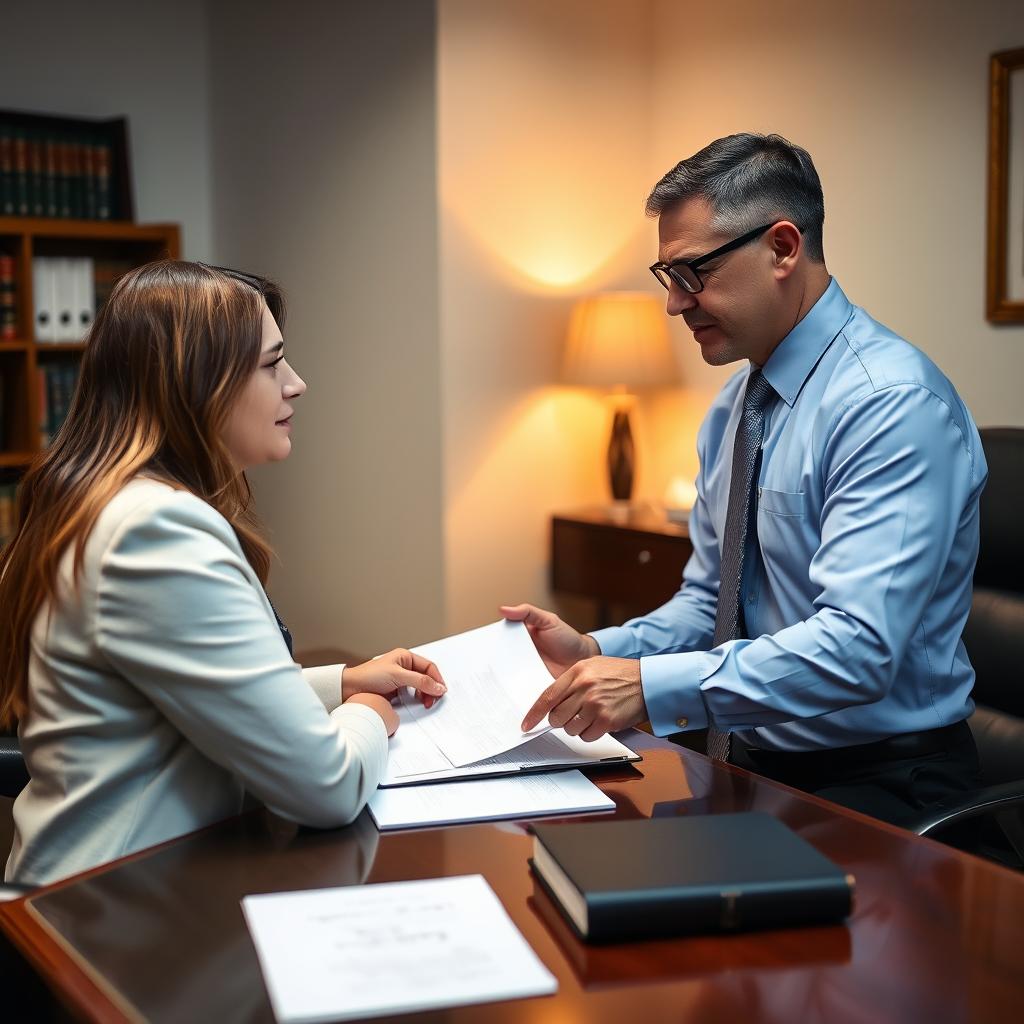
Contract Negotiation Lawyer Orleans County, NY
Contract negotiations shape the obligations, rights, and risk allocation that businesses and individuals live with for the life of an agreement. In Orleans County, where local enterprises, agricultural operations, and construction contractors rely on clear terms to operate along the Lake Ontario corridor, a poorly structured negotiation can leave a party exposed to disputes that could have been avoided. Mr. Sris and the firm’s Of Counsel attorneys represent clients in reviewing, drafting, and negotiating contracts so that the final document reflects the parties’ actual understanding and protects their interests. Whether the negotiation concerns a supply agreement for a Medina manufacturer, a service contract for an Albion-based vendor, or a commercial lease in Holley, the objective is to secure enforceable terms before performance begins. Contract negotiation is not merely about price; it addresses performance standards, warranties, indemnification, dispute-resolution mechanisms, and the allocation of risk that determines what happens when something goes wrong. The firm assists clients across Orleans County—including Kendall, Lyndonville, Ridgeway, Gaines, Carlton, and Yates—with matters that range from small-business agreements to complex B2B transactions. For questions about a contract you are preparing to negotiate or a proposed agreement you have been asked to sign, contact Law Offices Of SRIS, P.C. at (888) 437-7747. Law Offices Of SRIS, P.C. – Advocacy Without Borders.
What Contract Negotiation Means in Orleans County, NY
Orleans County is part of New York’s 8th Judicial District, and contract‑related litigation is generally filed in the Orleans County Supreme Court, located at 1 South Main Street in Albion. Because the Supreme Court has unlimited monetary jurisdiction, parties negotiating agreements with substantial value must understand that the forum for enforcement is a court of general jurisdiction applying New York contract law. That body of law is drawn from the common law, the Uniform Commercial Code as adopted in New York, and the Civil Practice Law and Rules. A contract that is properly negotiated and documented under governing New York law is far more likely to be enforced as written than one that rests on informal or ambiguous terms. Lawyers who practice regularly in the county are aware that Orleans County judges apply the same substantive contract principles as the rest of the state, but the practical reality is that familiarity with the local court’s procedures and the expectations of its bench can affect how a negotiation is structured, particularly when the parties anticipate that any dispute will be resolved in Albion.
Local conditions also influence contract terms. Orleans County’s economy includes agriculture, manufacturing, and a growing service sector. A contract for the sale of produce, for instance, may need to address delivery benchmarks, quality grading, and the consequences of delay—issues that are colored by the region’s growing season and transportation infrastructure along I-90 and the Lake Ontario State Parkway. Construction contracts in the county frequently involve seasonal timelines, and a carefully negotiated force‑majeure clause that accounts for Western New York winters can mean the difference between an enforceable delay and a breach. Because New York generally awards only compensatory and consequential damages for breach of contract—punitive damages are reserved for independent torts—the provisions that define the measure of recovery are among the most important points of negotiation. Whether the matter is ultimately resolved through negotiation or litigation in the local Supreme Court, the starting point is always the language that the parties agreed upon.
How Mr. Sris and the Firm’s Of Counsel Attorneys Handle Contract Negotiation Cases
Contract negotiation at Law Offices Of SRIS, P.C. begins with a careful review of the existing draft—or, if no draft exists, a discussion of the client’s commercial objectives and risk tolerances. The goal is to identify the terms that are most likely to become disputed if performance falters and to strengthen those provisions before the parties’ signatures lock them in. Mr. Sris and the firm’s Of Counsel attorneys then work with the client to formulate a negotiation strategy that prioritizes the issues with the greatest practical impact: scope of work, payment terms, limitation of liability, insurance requirements, termination rights, and the forum for dispute resolution. Where the other side is represented, the firm handles direct negotiation of the contract language, proposing revisions that protect the client’s position while keeping the deal commercially viable.
Once an agreement is reached, the firm prepares or reviews the final executed document to ensure that all negotiated points are reflected accurately. If a dispute later arises—for example, a claim that the contract was breached or that its terms are ambiguous—the same attorneys who understand the negotiation history can represent the client in an enforcement action before the Orleans County Supreme Court or, where appropriate, in an alternative dispute‑resolution forum. This continuity between the negotiation phase and any subsequent litigation means that the client’s original intent, as expressed during the negotiation, can be presented to the court with credibility. The firm’s approach is to create a clear record of the parties’ bargain at the outset, so that if litigation becomes necessary, the contract speaks for itself.
About Mr. Sris and the Firm’s Of Counsel Attorneys
Mr. Sris, Owner and Founder of Law Offices Of SRIS, P.C., is admitted to practice in New York, Virginia, Maryland, the District of Columbia, and New Jersey. He has been practicing since 1997 and appears in New York state courts, including the Supreme Court in Orleans County. Mr. Sris testified before the Virginia House Courts of Justice Committee in support of 2019 HB 635 (chief patron Del. David Bulova). The firm’s Of Counsel attorneys bring extensive combined legal experience between Mr. Sris and his Of Counsel. Together, they assist Orleans County clients with contract drafting, negotiation, and dispute resolution. The firm’s multi‑state footprint provides clients with a broad perspective on how contract language is interpreted across different jurisdictions, which can be valuable when negotiating agreements that cross state lines or involve parties outside Western New York.
Frequently Asked Questions
What does a contract negotiation lawyer do in Orleans County?
A contract negotiation lawyer in Orleans County reviews, drafts, and revises proposed agreements to protect a client’s rights before the contract is signed. The lawyer identifies ambiguous or one‑sided terms, proposes balanced language, and ensures that the final document reflects the parties’ actual understanding. In a county where many businesses are small and mid‑sized, the lawyer also helps the client understand the practical consequences of each provision, from payment schedules to dispute‑resolution clauses. The attorney may negotiate directly with the other party or its counsel and can prepare the contract so that it is more likely to be enforced in the Orleans County Supreme Court if a breach occurs. Early involvement by a lawyer often reduces the risk that a handshake deal will turn into costly litigation.
How can a lawyer help review a contract before I sign it in New York?
A lawyer can review a proposed contract to confirm that it complies with New York law and that key terms—such as remedies for breach, indemnification, and the governing law clause—are fair and enforceable. The review focuses on whether the document accurately captures the deal that was discussed and whether any hidden obligations or one‑sided default provisions would place the client at a disadvantage. Because New York courts enforce contracts as written, a careful review before signing is often the most cost‑effective way to avoid litigation. The lawyer may also recommend adding or deleting language to address industry‑specific risks common in Orleans County, such as seasonal performance deadlines in construction or agricultural supply agreements.
What is the statute of limitations for a contract claim in New York?
In New York, a claim for breach of a written contract must generally be filed within six years of the breach (CPLR § 213(2)). The same six‑year period applies to oral contracts. For claims involving the sale of goods under Article 2 of the Uniform Commercial Code, the limitation period is four years (UCC § 2‑725). The clock typically begins to run when the breach occurs, not when the harm is discovered. Because a missed deadline can bar a claim entirely, it is important to consult a lawyer promptly if you believe a party has failed to perform under an agreement. The Orleans County Supreme Court will dismiss an action filed after the applicable limitations period has run.
What are the consequences of a poorly negotiated contract?
A poorly negotiated contract can leave a party exposed to unintended liability, limit the available remedies if the other side breaches, and create costly disputes over meaning. Ambiguous performance standards, missing indemnification clauses, or one‑sided termination rights may mean that the agreement is enforced in a way that the parties never anticipated. In New York, compensatory and consequential damages are available for breach, but punitive damages are generally not recoverable unless an independent tort is proven. A contract that fails to address how damages will be measured may force a party to litigate issues that a well‑drafted agreement would have settled. The cost of renegotiating or litigating a flawed contract almost always exceeds the cost of thorough negotiation at the outset.
Why should I hire a local contract negotiation lawyer in Orleans County?
A local contract negotiation lawyer is familiar with the Orleans County Supreme Court, the expectations of the bench, and the business climate of Western New York. While New York contract law is uniform throughout the state, practical considerations—such as local court scheduling, the availability of alternative dispute resolution, and the region’s economic patterns—can influence how negotiations are handled. An attorney who appears regularly in Albion understands what a judge in the 8th Judicial District is likely to focus on if a contract dispute reaches litigation. That perspective allows the lawyer to address likely points of contention during the negotiation, before a complaint is ever filed.
Do I need a lawyer for every contract negotiation in New York?
You are not required to have a lawyer for every contract negotiation, but legal guidance helps ensure that your agreement is legally enforceable and that its terms protect your interests. For high‑value or long‑term agreements—such as a distribution agreement, a commercial lease, or a construction contract—the risk of proceeding without counsel can be significant. Even a seemingly simple contract can contain provisions that shift risk in ways that are not immediately apparent. A lawyer can identify those provisions and negotiate changes before the deal is finalized. For routine or low‑stakes transactions, some parties choose to review standard‑form agreements on their own, but a lawyer’s review remains a prudent investment whenever the contract involves substantial obligations or the potential for a dispute.
For additional contract‑law resources in other New York localities, see:
Contract Lawyer New York County (Manhattan) |
Contract Lawyer Kings County (Brooklyn) |
Contract Lawyer Queens County |
Contract Lawyer Richmond County (Staten Island) |
Contract Lawyer Nassau County
Primary sources for New York contract law include the New York Civil Practice Law and Rules (statute of limitations provisions), available at N.Y. CPLR § 213, and the website of the New York State Unified Court System, which provides information about the Orleans County Supreme Court at Orleans County Supreme Court.
Attorney advertising. Prior results do not guarantee a similar outcome. Case results depend on a variety of factors unique to each case. Results may vary.