
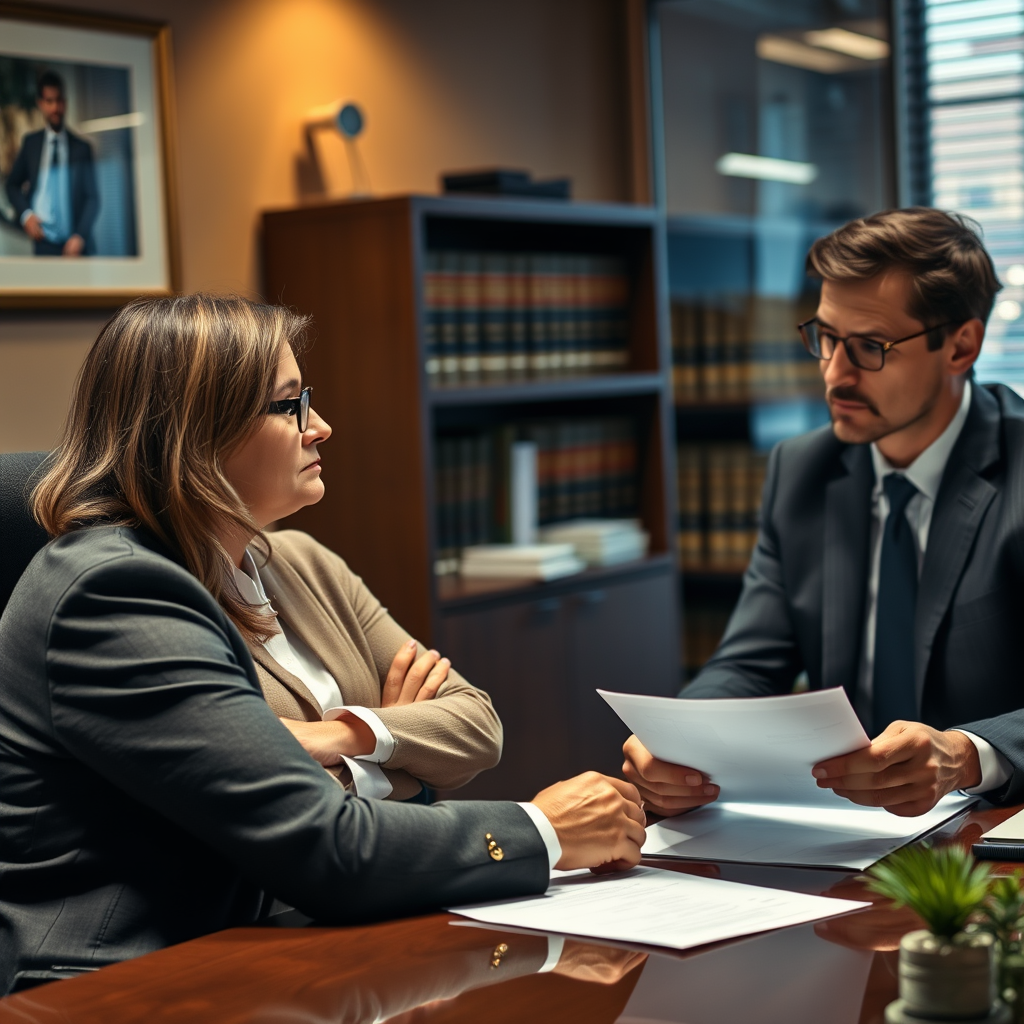
What is a Contract Dispute Lawsuit in Oswego County?
A contract dispute lawsuit in Oswego County, New York, arises when one party alleges that another party has failed to uphold their obligations under a legally binding agreement. In essence, the dispute centers on a perceived breach of contract—the failure to perform a duty promised within the written or oral terms of the agreement. Contracts are the bedrock of commerce, governing everything from real estate transactions and employment agreements to complex commercial deals. When these foundational promises break down, the resulting conflict often requires formal legal intervention.
It is crucial to understand that simply disagreeing with another party’s interpretation of a contract does not automatically mean a lawsuit is necessary. However, when negotiations fail, financial losses mount, or the stakes become too high to resolve amicably, pursuing litigation becomes the primary mechanism for seeking redress. Our firm understands that navigating the legal system in Oswego County can feel overwhelming. This guide aims to demystify the process, outlining what constitutes a dispute, the typical stages of litigation, and what steps you should take immediately upon realizing your contractual rights have been violated.
What Exactly Constitutes a Contract Dispute?
At its core, a contract dispute is a disagreement over the terms, existence, or performance of a contract. For a lawsuit to proceed successfully, the plaintiff (the party suing) must generally prove several elements:
- Existence of a Valid Contract: There must first be proof that a legally enforceable agreement existed. This requires mutual assent (both parties agreeing to the same thing), consideration (each party giving something of value), and lawful purpose.
- Breach of Contract: The plaintiff must demonstrate that the defendant failed to perform an action they were contractually obligated to perform, or performed an action that was materially different from what was promised.
- Damages: Finally, the plaintiff must prove that this breach directly caused them quantifiable financial harm or loss.
The type of dispute can vary widely. Some disputes involve simple non-payment for goods delivered, while others involve complex disagreements over intellectual property rights or scope creep in large commercial development projects. Because the law governing contracts is highly fact-specific, consulting with experienced contract litigation lawyers is essential to accurately assessing your claim.
What Are the Common Causes of Breach in Oswego County?
While the specifics depend on the agreement, breaches of contract generally fall into a few common categories. Understanding these potential causes can help you frame your initial assessment and prepare for discussions with legal counsel.
Failure to Perform (Non-Performance)
This is the most straightforward breach: one party simply fails to deliver what they promised. For example, if a construction contract requires a vendor to deliver materials by a specific date, and they fail to show up, that constitutes non-performance.
Breach of Warranty
A warranty is a guarantee of quality or performance. If a contract specifies that a piece of equipment must operate at a certain efficiency level, and it consistently fails to meet that standard, the seller may be in breach of warranty. This often requires expert testimony to prove the deviation from the agreed-upon standard.
Misrepresentation
This occurs when one party makes false statements of fact—or even omits critical facts—that induce the other party to enter into the contract. For instance, if a seller claims a piece of land has zoning approval for commercial use when it actually requires residential zoning, that misrepresentation can void the contract or lead to a lawsuit.
The goal in any dispute is not just to prove that a breach occurred, but to quantify the resulting damages. This calculation forms the core of the lawsuit’s financial claim.
What Is the Legal Process for a Contract Dispute?
The journey from initial disagreement to potential judgment is structured, though it can feel protracted. The process typically moves through several distinct phases:
Phase 1: Investigation and Demand
Before filing any paperwork, an attorney will conduct a thorough investigation. This involves gathering all documentation—the original contract, emails, invoices, correspondence, and any expert reports. Next, the firm will usually send a formal “Demand Letter.” This letter is critical; it formally notifies the opposing party of the breach, specifies the exact contractual clauses violated, and demands a specific remedy or payment by a set deadline. This step often resolves disputes without ever needing a courtroom.
Phase 2: Negotiation and Mediation
If the demand letter fails to resolve the issue, the parties are usually guided toward alternative dispute resolution (ADR). Mediation involves bringing in a neutral third party—the mediator—who facilitates communication between both sides. The mediator does not make a decision but helps the parties reach a mutually acceptable settlement. This is almost always faster and less expensive than trial.
Phase 3: Litigation (Filing Suit)
If negotiation and mediation fail, the lawsuit is filed with the appropriate court in Oswego County. This initiates formal litigation. The defendant will file an Answer, and the case moves into discovery. Discovery is the most intensive phase, where both sides exchange evidence, take depositions (sworn testimony outside of court), and submit documents to build their respective cases.
Phase 4: Trial and Judgment
If the dispute cannot be settled before trial, the case proceeds to a courtroom hearing. Here, attorneys present their evidence and call witnesses. The judge or jury then determines whether a breach occurred and, if so, what the appropriate damages are. The final outcome is the judgment.
How Do I Prepare for a Contract Dispute in Oswego County?
Preparation is your greatest asset. If you suspect you are involved in a contract dispute, immediate action is required. First, secure every piece of documentation related to the agreement—emails, drafts, signed papers, meeting notes, and financial records. Second, do not communicate with the opposing party regarding the substance of the dispute without first consulting an attorney. Anything you say can potentially be used as evidence against you. Third, compile a detailed timeline of events, noting who did what, when, and under what circumstances. By organizing this information, you provide your legal counsel with the clearest possible picture of the situation.
What Are the Damages Calculated in a Contract Dispute?
The goal of damages is to put the non-breaching party in the financial position they would have been in had the contract been fully performed. This is known as “expectation damages.” These damages are not limited only to direct monetary losses.
- Direct Damages: These are the immediate, quantifiable losses resulting from the breach (e.g., the cost of hiring a replacement vendor).
- Consequential Damages: These are indirect losses that were reasonably foreseeable at the time the contract was signed (e.g., lost profits because the delay in construction meant you couldn’t open your store on time).
- Liquidated Damages: If the original contract included a specific clause detailing penalties for breach, these pre-agreed amounts may be recoverable.
Calculating damages is often complex and requires expert testimony—whether that experience relates to accounting, construction timelines, or market value fluctuations. This complexity underscores the necessity of retaining experienced counsel.
How Mr. Sris and the Firm’s Of Counsel Attorneys Handle Contract Dispute Lawsuits in Oswego County
Handling contract dispute lawsuits requires a highly methodical, multi-layered approach that moves beyond simple legal theory into practical business strategy. Our process begins with an exhaustive review of the governing documents to pinpoint the exact nature and scope of the breach. We analyze not only what was promised but also what was implied—the unwritten understandings that often form the true basis of the commercial relationship. This initial deep dive allows us to build a comprehensive narrative of liability for our clients, ensuring that every potential angle of recovery is considered before any formal demand is issued.
When engaging in litigation, we leverage our extensive experience across multiple jurisdictions to build airtight cases. Our strategy involves coordinating expert witnesses who can speak to the technical aspects of the breach, whether it involves complex accounting or engineering standards. Furthermore, we utilize our network to facilitate confidential settlement discussions, aiming for resolutions that protect our clients’ long-term business interests while achieving maximum financial recovery. This comprehensive approach is central to how we guide clients through the complexities of contract dispute lawsuits in Oswego County.
About Mr. Sris and the Firm’s Of Counsel Attorneys
Mr. Sris, Owner and Founder, has built a practice defined by rigorous attention to detail and a commitment to achieving favorable outcomes for clients facing complex litigation. As a former prosecutor, he brings a thorough understanding of evidence presentation, legal procedure, and the adversarial nature of disputes. His career has been marked by dedication to justice, evidenced by his admission in Virginia, Maryland, the District of Columbia, New Jersey, and New York. This multi-jurisdictional background allows us to advise clients on matters that cross state lines, ensuring compliance with varied legal standards.
The firm’s Of Counsel attorneys are a collective of highly specialized practitioners who augment our core team, providing niche experience across various industries and legal fields. They operate independently but work in concert with the firm to provide extensive depth of knowledge. Whether the matter requires specialized knowledge in commercial real estate law or intricate financial compliance, the combined experience of Mr. Sris and the firm’s Of Counsel attorneys ensures that our clients receive counsel that is both broad in scope and deep in technical mastery.
Dealing with a contract dispute lawsuit in Oswego County requires immediate, experienced attorney attention. Do not attempt to navigate this complex process alone. Contact Law Offices Of SRIS, P.C. Today at (888) 437-7747 to schedule a confidential consultation.
What is a Contract Dispute Lawsuit in Oswego County, NY?
A contract dispute lawsuit in Oswego County, NY, is a formal legal action initiated when one party believes another has violated the terms of a legally binding agreement. It is a process designed to resolve disagreements over performance, payment, or interpretation of contractual obligations through the judicial system.
What Are Common Types of Contract Disputes?
While the law is flexible, disputes often revolve around predictable themes. These include non-payment for goods or services rendered, disagreements over scope creep (where one party demands work outside the original contract), and issues related to intellectual property usage that were covered under a licensing agreement. Each type requires a tailored legal strategy.
How Does Evidence Play a Role in Contract Disputes?
Evidence is the factual backbone of any lawsuit. In contract disputes, evidence can take many forms: written documents (the contract itself, amendments, correspondence), digital records (emails, texts), and testimonial evidence (witness accounts). The ability to authenticate and present this evidence persuasively is what determines the outcome in court.
What Is Breach of Implied vs. Express Contract?
An express contract has all its terms explicitly written down or stated aloud. An implied contract, conversely, is one inferred from the parties’ actions and conduct. A dispute over an implied contract can be significantly harder to prove because there is no single document containing all the agreed-upon terms. Understanding which type of agreement you have is a critical first step.
What Is the Difference Between Mediation and Arbitration?
Both mediation and arbitration are forms of Alternative Dispute Resolution (ADR) designed to keep disputes out of court. Mediation involves a neutral third party helping you negotiate a settlement. Arbitration, however, is more formal; the arbitrator acts like a private judge, hearing evidence from both sides and issuing a binding decision that is often difficult to appeal.
What Are the Potential Damages in a Contract Dispute?
Damages aim to restore the injured party to their pre-breach financial state. These can include compensatory damages (covering actual losses), punitive damages (if the breach was willful or malicious, though these are harder to obtain), and lost profits. The calculation must be precise and directly tied back to the specific terms of the contract that were violated.
What Is the Statute of Limitations for Contract Disputes?
This is perhaps the most time-sensitive question. Every jurisdiction, including Oswego County, NY, has a statute of limitations—a deadline by which you must file your lawsuit. If you wait too long, even if you have a valid claim, the court may dismiss it because the right to sue has expired. These periods vary significantly based on the nature of the contract and the governing state law.
How Do I Best Prepare for a Contract Dispute Lawsuit?
The trusted preparation involves immediate documentation, securing all communications, and retaining counsel promptly. You must preserve the status quo of the evidence. Furthermore, preparing means understanding your goals: are you seeking money, or are you seeking to force the completion of a service? Defining your desired outcome helps your attorney build the most effective legal theory.
What Is the Role of a Lawyer in Contract Disputes?
A lawyer’s role is multifaceted: they are investigators, negotiators, strategists, and advocates. They interpret complex legal language, manage the evidence exchange during discovery, negotiate settlements under pressure, and ultimately present your case to the court in the most compelling light possible. Their experience mitigates the risk of procedural mistakes that can derail a strong claim.
Frequently Asked Questions About Contract Disputes in Oswego County
What is the difference between a breach and a dispute?
A dispute is merely a disagreement over whether a breach occurred. A breach is the actual failure to fulfill a contractual obligation. The lawsuit addresses the dispute by determining if a breach actually took place.
If I sign an agreement, am I automatically bound by it?
Generally, yes, but you are not always bound by everything written. You must review every clause carefully for ambiguities or terms that contradict your true intent. An attorney can advise on enforceability.
Can a contract be voided if one party was misled?
Yes. If the contract was based on misrepresentation, fraud, or duress, a court may deem the contract voidable or void entirely, meaning neither party is bound by its terms.
How long does it take to resolve a contract dispute lawsuit?
The timeline varies dramatically. Simple disputes might settle in months through mediation, while complex commercial litigation can take several years due to the depth of discovery required.
Do I need an attorney if the dispute is small?
Even for smaller amounts, retaining counsel is advisable. A lawyer ensures that your rights are protected procedurally and can help you negotiate a settlement that maximizes your recovery.
What happens if the other party refuses to cooperate with discovery?
The court has mechanisms to compel cooperation. If the opposing side stonewalls, your attorney can file motions with the judge, which can result in sanctions or penalties against the non-cooperative party.
Is arbitration always better than litigation?
Not necessarily. Arbitration is faster and private, but the decision is final and binding. Litigation allows for appeals and public scrutiny, which some parties prefer.
Can a contract dispute involve multiple states?
Yes, especially in commercial matters. This introduces conflicts of law, meaning you must determine which state’s laws govern the contract, adding significant complexity to the legal fight.
Navigating a contract dispute lawsuit in Oswego County requires precision and experience. If you have questions about whether your agreement was breached or how to best proceed, do not wait. Reach our location at (888) 437-7747 to speak with an attorney who can analyze your specific situation.
The law governing contracts is intricate, and the outcome of a dispute hinges on meticulous preparation and experienced attorney legal representation. By understanding the process—from initial investigation through potential litigation—you are better equipped to advocate for your rights. We encourage you to review our resources on breach of contract law and commercial litigation services to deepen your understanding before taking the next step.
Ultimately, resolving a contract dispute lawsuit is about enforcing promises. Our commitment at Law Offices Of SRIS, P.C. is to provide the rigorous advocacy necessary to protect your interests and achieve the trusted … Resolution for you in Oswego County and beyond.
Case results depend on a variety of factors unique to each case.
Attorney advertising. Prior results do not guarantee a similar outcome.