
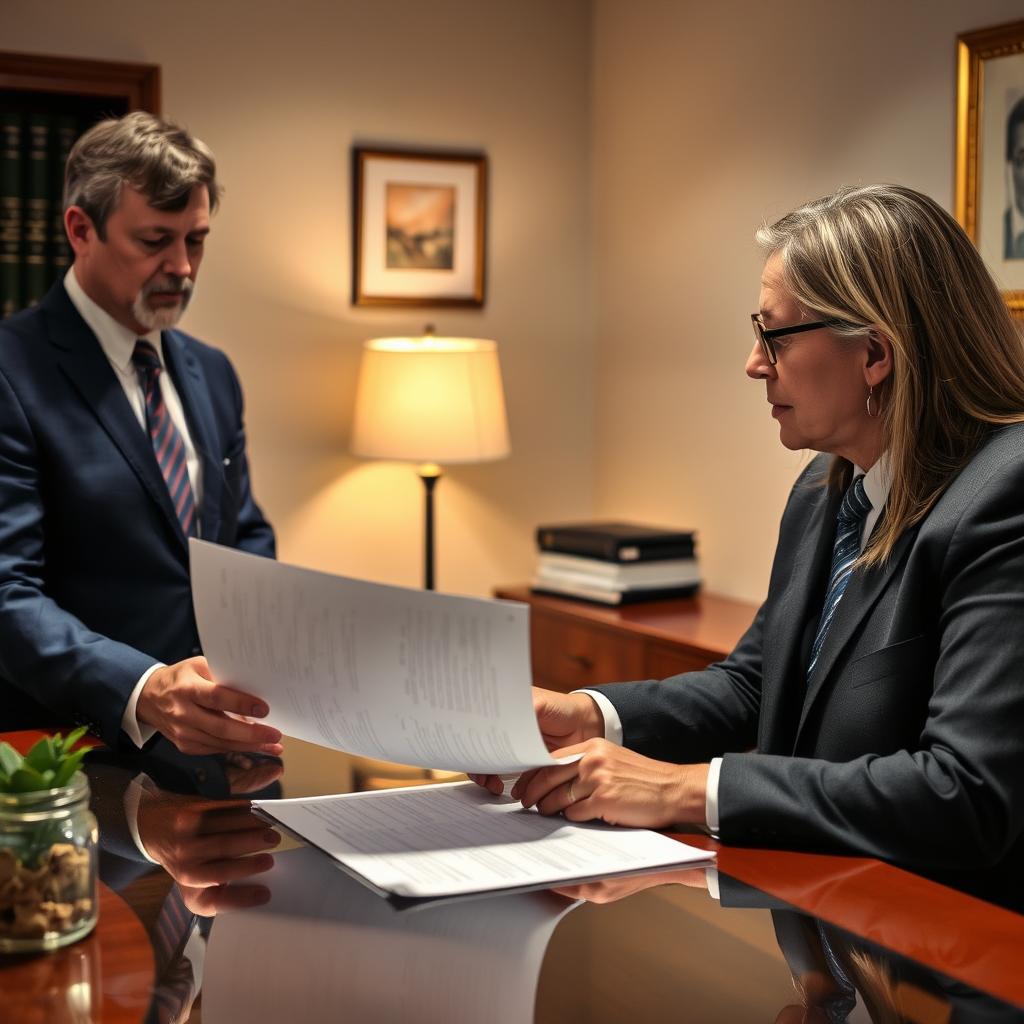
Licensing Agreement Lawyer Howard County, MD
Licensing agreements are essential tools for businesses in Howard County, allowing the owner of intellectual property—such as a patent, trademark, software, or proprietary technology—to grant another party the right to use that property under defined terms. When a licensing dispute arises, whether involving unpaid royalties, unauthorized use, or contract interpretation, the outcome can affect a company’s revenue, market position, and operational freedom. With a business community that spans Columbia, Ellicott City, Elkridge, and beyond, Howard County companies rely on agreements that are both legally sound and practically enforceable. Law Offices Of SRIS, P.C. Concentrates its contract law practice on licensing matters, bringing substantial experience to negotiations, drafting, and dispute resolution. From our Maryland location, Mr. Sris and his Of Counsel team represent clients in Howard County courts, including the District Court of Maryland for Howard County and the Howard County Circuit Court. To discuss a licensing agreement issue, reach us at (888) 437‑7747. Law Offices Of SRIS, P.C. – Advocacy Without Borders.
What Licensing Agreements Mean in Howard County, MD
A licensing agreement is a contract in which a licensor permits a licensee to use intellectual property in exchange for compensation—often royalties or a flat fee. Under Maryland law, the agreement is governed by the Maryland Uniform Commercial Code (Md. Code Com. Law § 1‑101 et seq.) and general contract principles. To be enforceable, the agreement must reflect a meeting of the minds: a clear offer, acceptance, consideration, and the parties’ intent to be bound. Howard County businesses, ranging from tech startups near the Applied Physics Laboratory to established firms in Columbia’s corporate parks, depend on licensing arrangements to monetize innovation, expand distribution, or access specialized technology.
When a disagreement over a license escalates, the court in which the matter is heard often turns on the amount in controversy. Claims within certain statutory limits fall within the exclusive jurisdiction of the District Court of Maryland for Howard County, while claims exceeding a higher statutory threshold must be filed in the Howard County Circuit Court (Md. Code, Cts. & Jud. Proc. §§ 4‑401, 4‑402). For amounts in between, the courts share concurrent jurisdiction. Maryland law generally provides a three‑year statute of limitations for breach‑of‑contract claims (Cts. & Jud. Proc. § 5‑101) and a four‑year period for sales contracts under the UCC. Working with a licensing agreement lawyer familiar with Howard County procedure helps ensure that deadlines are met and that the proper forum is chosen from the start.
How Mr. Sris and His Of Counsel Handle Licensing Agreement Cases
Mr. Sris and his Of Counsel approach licensing matters by first understanding the commercial purpose behind the agreement. Whether a client needs to draft a new license for proprietary software, negotiate a royalty structure for a patented invention, or enforce an existing agreement against a licensee who stopped paying, the attorney focuses on protecting the client’s business interests while preserving ongoing commercial relationships where possible. The team reviews the governing contract language, analyzes any course of performance between the parties, and evaluates remedies that may include monetary damages, specific performance, or rescission.
If litigation becomes necessary, the firm prepares the case for trial in the appropriate Howard County court. Because Mr. Sris and his Of Counsel are experienced multi‑state practitioners, they can also manage licensing disputes that cross jurisdictional boundaries—for instance, when a licensee operates in Maryland but the licensor is based in Virginia or the District of Columbia. Throughout the process, the firm works toward a favorable outcome, although the timeline depends on the complexity of the case and the court’s docket. Clients are encouraged to contact the firm early, as prompt action can help preserve evidence and clarify the scope of any alleged breach.
About Mr. Sris and His Of Counsel Team
Mr. Sris, Owner and Founder of Law Offices Of SRIS, P.C., established the firm in 1997. He is a former prosecutor who now concentrates his practice on contract law, among other areas. Mr. Sris brings the analytical rigor of a trial lawyer to licensing disputes, and he is admitted to practice in Maryland, Virginia, the District of Columbia, New Jersey, and New York. His Of Counsel team includes attorneys with extensive experience in commercial litigation, contract drafting, and negotiation. Together, they provide practical, business‑focused counsel to clients throughout Howard County, from a Columbia entrepreneur licensing a mobile app to a Clarksville manufacturing company protecting its trade secrets. Mr. Sris and his Of Counsel prioritize clear communication and proactive strategy so that clients understand their options at every stage of a licensing matter.
Frequently Asked Questions
What should I do if the other party breaches a licensing agreement in Howard County?
You can file a breach‑of‑contract lawsuit seeking compensatory damages, specific performance, or other relief. First, review the agreement for any notice‑and‑cure provisions that may require you to send a formal demand letter. Then consult an attorney who can evaluate the contract, calculate your damages, and recommend whether to file in District Court or Circuit Court based on the amount in dispute. Maryland’s three‑year statute of limitations (written contracts) and four‑year period (UCC sales) apply. Prompt action helps preserve your legal rights. For guidance on your specific situation, reach Law Offices Of SRIS, P.C. at (888) 437‑7747.
What makes a licensing agreement enforceable in Maryland?
An enforceable licensing agreement requires offer, acceptance, consideration, and mutual assent, just like any other contract. Under the Maryland UCC, certain agreements must also satisfy the statute of frauds, meaning they must be in writing and signed by the party to be charged if they cannot be performed within one year or involve the sale of goods above a certain value. The agreement should clearly define the licensed property, the scope of use, territory, term, royalty obligations, and termination rights. Ambiguous terms can lead to litigation; a well‑drafted agreement reduces that risk. To discuss the details of your matter, contact Law Offices Of SRIS, P.C. at (888) 437‑7747.
Do I need a lawyer to draft a licensing agreement or can I use a template?
You are not legally required to hire a lawyer, but using a generic template can create costly gaps. A licensing agreement must be tailored to your business, the specific intellectual property involved, and the applicable Maryland law. A template may miss important provisions—such as quality control clauses, indemnification, confidentiality, and dispute‑resolution mechanisms—that are standard in well‑drafted licenses. An experienced contract attorney will ensure the agreement aligns with your commercial goals and reduces the chance of future disputes. For a consultation, reach Mr. Sris and his Of Counsel at (888) 437‑7747.
How do Maryland courts handle royalty disputes?
Maryland courts interpret licensing agreements according to their plain language and will enforce royalty provisions as written. If a licensee fails to pay royalties, the licensor can sue for breach of contract and seek damages equal to the unpaid amounts plus interest. In some cases, the court may order an accounting to determine the proper royalty calculation. The parol evidence rule generally prevents parties from introducing prior or contemporaneous oral agreements that contradict a written license, making it critical that the written agreement accurately reflects the parties’ deal. Because these cases often involve financial examinations, having an attorney who understands both contract law and business valuation can be an advantage.
What if a licensing dispute involves parties in different states?
When a licensing dispute spans multiple states, jurisdictional questions become important. Many licensing agreements include a choice‑of‑law and forum‑selection clause that specifies which state’s law governs and where any lawsuit must be filed. If the agreement is silent, Maryland’s long‑arm statute (Cts. & Jud. Proc. § 6‑103) may allow a court to exercise personal jurisdiction over an out‑of‑state party who transacts business in Maryland or contracts to supply goods or services here. Law Offices Of SRIS, P.C. serves clients across multiple jurisdictions, including Maryland, Virginia, the District of Columbia, New Jersey, and New York, so the firm can handle licensing matters that cross state lines.
Can I recover attorney’s fees if I win a licensing dispute in Howard County?
Attorney’s fees are generally not awarded to the winning party in a Maryland contract case unless the licensing agreement itself contains a fee‑shifting provision or a statute authorizes them. Many commercial licenses include a clause that requires the losing party to pay the prevailing party’s costs and fees. Without such a provision, each side usually bears its own legal expenses. A well‑drafted license can make a significant difference in the recovery available. Before signing any agreement, it is wise to have an attorney review and, if necessary, negotiate a fee‑shifting clause that protects your interests.
Related practice areas and nearby counties:
Montgomery County contract lawyer |
Prince George’s County contract lawyer |
Anne Arundel County contract lawyer |
Frederick County contract lawyer |
Baltimore County contract lawyer
Reliable primary sources:
Maryland Judiciary |
Maryland General Assembly (Maryland Code) |
Maryland Judiciary Case Search
Attorney advertising. Prior results do not guarantee a similar outcome. Results may vary.
Case results depend on a variety of factors unique to each case.