
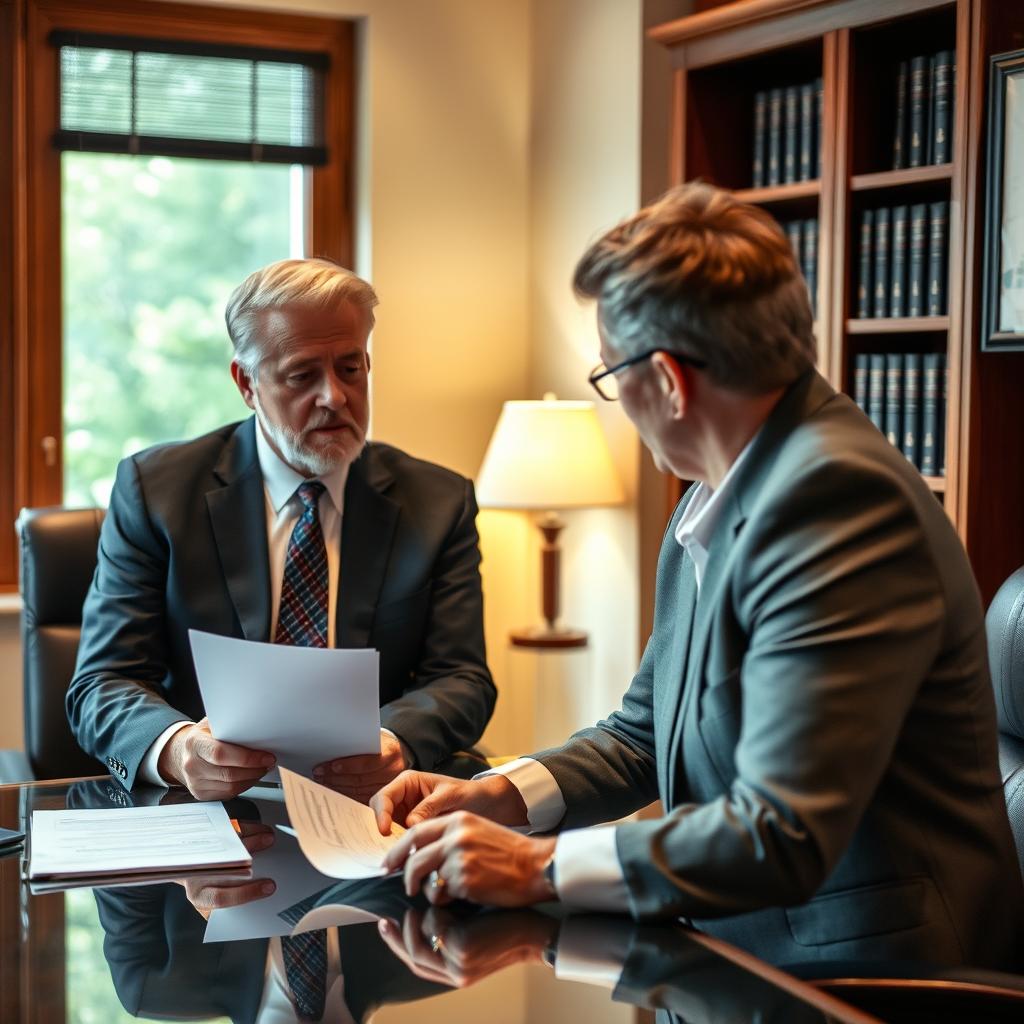
Licensing Lawyer Falls Church, VA
Licensing agreements are the foundation of many business relationships in Falls Church, Virginia. Whether you hold a patent, trademark, copyrighted work, or trade secret, a well-drafted license allows you to share intellectual property while retaining ownership. When a licensing partner fails to pay royalties, uses your property beyond the agreed scope, or breaches confidentiality, the financial and competitive damage can be significant. At Law Offices Of SRIS, P.C., we concentrate on resolving licensing disputes and enforcing contractual rights for clients in Falls Church and throughout Northern Virginia. We understand that every license dispute—from unpaid royalties to unauthorized use of protected materials—involves unique technical and business considerations. A prompt, knowledgeable response protects your interests and preserves business relationships where possible. Reach Law Offices Of SRIS, P.C. at (888) 437-7747 to schedule a consultation. Law Offices Of SRIS, P.C. – Advocacy Without Borders.
What Licensing Law Means in Falls Church, Virginia
Licensing law in Virginia is fundamentally contract law. Whether your agreement involves software, franchise rights, patents, music, or trade secrets, the Virginia Uniform Commercial Code (Title 8.1A) and common-law contract principles govern the relationship. Virginia courts generally enforce contracts as written and apply the parol evidence rule strictly—meaning the written terms of a well-drafted licensing agreement are heavily relied upon. This makes careful drafting and review especially important.
Falls Church is an independent city within the Seventeenth Judicial District, with civil matters heard in the Falls Church General District Court and the Falls Church Circuit Court. Contract disputes may be filed in the General District Court or the Circuit Court depending on the amount in controversy. A demand letter typically precedes formal litigation, after which discovery, motions practice, and trial follow. Appeals from the General District Court go to the Circuit Court for a new trial. Our Fairfax location at 4008 Williamsburg Court regularly appears in these courts, and we are familiar with local docket management, judicial preferences, and the practical considerations that affect case timelines.
In Virginia, a breach of a written licensing agreement must generally be brought within five years (Va. Code § 8.01-246(2)), while oral contracts have a three-year period (§ 8.01-246(4)).
Source: Va. Code § 8.01-246(2), (4). Virginia Code – § 8.01-246
Reviewed by Mr. Sris, admitted in VA/MD/DC/NJ/NY.
Civil claims may be filed in the Falls Church General District Court or the Circuit Court depending on the amount in controversy (exclusive of interest and costs).
Source: Va. Code § 16.1-77(1). Virginia Code – § 16.1-77
Reviewed by Mr. Sris, admitted in VA/MD/DC/NJ/NY.
How Mr. Sris and His Of Counsel Handle Licensing Matters
We approach licensing disputes pragmatically. Many disagreements over royalty calculations or usage restrictions can be resolved through negotiation without filing a lawsuit, preserving the underlying business relationship when both parties share that goal. Our team reviews the original license agreement, any amendments, and the relevant course of performance to determine whether a breach has occurred and what remedies are available.
If litigation becomes necessary, we prepare the case for trial in the appropriate Falls Church court, whether in the General District Court for smaller disputes or the Circuit Court for matters exceeding the jurisdictional threshold. We handle all aspects of civil litigation, including drafting the complaint, engaging qualified expert witnesses where warranted, conducting discovery, and presenting the matter at trial. Throughout the process, we keep you informed and advise on the potential costs and benefits of settlement at each stage. The timeline for a licensing dispute varies based on court scheduling, the complexity of the licensing arrangement, and the willingness of the parties to negotiate—we will discuss what to expect based on the specific circumstances of your matter.
About Mr. Sris and His Of Counsel Team
Mr. Sris, Owner and Founder of Law Offices Of SRIS, P.C., built the firm in 1997 on a foundation of disciplined advocacy. A former prosecutor, he brings a trial-tested perspective to civil litigation, including complex contractual disputes. Mr. Sris is admitted to practice in Virginia, Maryland, the District of Columbia, New Jersey, and New York, allowing the firm to serve clients whose licensing issues cross state lines.
Mr. Sris and his Of Counsel team bring over 120 years of combined legal experience, with 4,739+ documented firm-wide results. Results may vary. The team includes attorneys with deep backgrounds in business, commercial, and contract law who apply that experience to every licensing matter we undertake. Together, we evaluate licensing agreements, identify sustainable theories for recovery or defense, and advocate for a resolution that aligns with your objectives—whether that means enforcing the license, defending against an alleged breach, or negotiating an amendment that reflects changed business conditions.
Frequently Asked Questions
What is a licensing agreement and how is it enforced in Virginia?
A licensing agreement is a contract that grants permission to use intellectual property—such as a patent, trademark, software, or copyrighted work—in exchange for compensation, typically royalties. Virginia courts treat licensing agreements like any other contract: they enforce the written terms and apply the parol evidence rule strictly. If a party fails to perform—for instance, by refusing to pay royalties or by using the property beyond the license scope—the aggrieved party may sue for breach of contract. Remedies can include monetary damages, an order to stop the unauthorized use, or specific performance. The court will look to the agreement’s language, course of performance, and any applicable provisions of the Virginia Uniform Commercial Code. A thorough review of the contract is the first step in determining enforceability and the available remedies.
What should I do if a licensing agreement is breached in Falls Church?
If a licensing partner breaches your agreement, begin by documenting the breach—save correspondence, accounting records, and any evidence of unauthorized use—then consult a licensing lawyer to evaluate your options. In Falls Church, time is critical because Virginia statutes of limitations apply: five years from the breach for written contracts and three years for oral contracts. A demand letter is typically the first step, putting the other party on notice and often opening a path to negotiation. If the breach is not resolved, a lawsuit may be filed in the appropriate court. Engaging counsel early helps protect your rights, preserve evidence, and position you for a favorable resolution—whether through settlement or trial. For guidance on your specific situation, reach Law Offices Of SRIS, P.C. at (888) 437-7747.
Do I need a lawyer to draft or review a licensing agreement?
You are not legally required to hire a lawyer to draft or review a licensing agreement, but doing so significantly reduces the risk of costly disputes later. A well-drafted license anticipates potential problems: royalty calculation methods, audit rights, termination triggers, dispute resolution procedures, and choice-of-law clauses. Virginia courts enforce agreements as written, so ambiguous terms can lead to expensive litigation. An experienced licensing lawyer can identify gaps, clarify obligations, and ensure the contract protects your intellectual property and commercial interests. If the agreement is for a high-value asset—such as a patented invention, a franchise brand, or a unique software platform—legal review is prudent. To discuss the details of your matter, contact Law Offices Of SRIS, P.C. at (888) 437-7747.
How does litigation for a licensing dispute proceed in Virginia?
Licensing litigation in Virginia typically begins with the filing of a complaint in the General District Court or Circuit Court, depending on the amount in controversy. The plaintiff must serve the defendant with the complaint, and the defendant then has an opportunity to respond. The discovery phase follows, during which both sides exchange documents and may take depositions. A licensing dispute often requires expert testimony—for example, an accountant to calculate royalties or an industry professional to establish the value of the licensed property. Motions may narrow the issues before trial. Some cases resolve through mediation or settlement. If not, the matter proceeds to a trial where a judge (or, in Circuit Court, sometimes a jury) decides the outcome. Throughout, the timeline depends on the court’s docket and the complexity of the licensing arrangement.
What remedies are available for breach of a licensing contract in Virginia?
The remedies for breach of a licensing contract in Virginia include monetary damages, specific performance, and, in appropriate circumstances, rescission of the agreement. Compensatory damages are intended to put the non-breaching party in the position it would have been in had the contract been performed—often lost royalties or profits. Consequential damages may also be recoverable if they were foreseeable at the time of contracting. Punitive damages are generally not available in breach-of-contract cases. Specific performance—compelling the breaching party to fulfill the license terms—is an extraordinary remedy that courts grant only when money damages are inadequate. Attorney fees may be recoverable if the licensing agreement contains a fee-shifting provision. Each remedy depends on the specific facts of the case and the language of the contract.
Explore other Virginia contract law resources: Fairfax County contract lawyer · Fairfax City contract lawyer · Prince William County contract lawyer · Manassas contract lawyer
Additional legal reference: Virginia Code Title 13.1 · SCC business entity filings · Virginia Courts
Attorney advertising. Prior results do not guarantee a similar outcome. Results may vary. The Supreme Court of Virginia does not recognize certification of practice in any field of law. The facts and outcome of each case are unique.
Case results depend on a variety of factors unique to each case.