
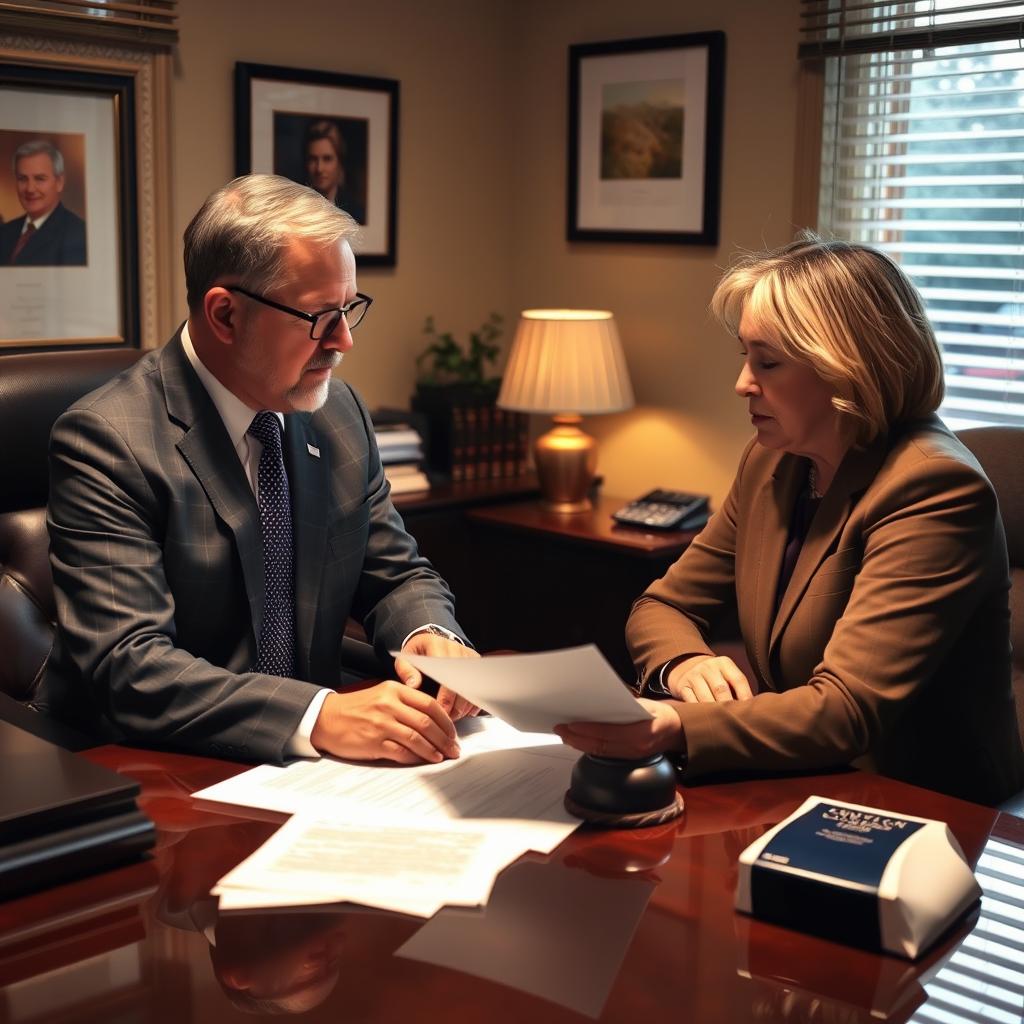
Contract Negotiation Lawyer Fairfax, VA
Contract negotiation sits at the center of most business and personal dealings in Fairfax, Virginia. From service agreements and supply contracts to licensing arrangements and employment terms, each negotiation shapes rights, obligations, and risk exposure for years to come. Law Offices Of SRIS, P.C. Concentrates its contract-law practice on counseling clients through the negotiation process, anticipating points of friction before a dispute arises, and litigating enforceability questions when disagreements cannot be resolved informally. Mr. Sris and his Of Counsel team bring the firm’s multi-state experience to bear on Virginia contract matters, drawing on over 120 years of combined legal experience and more than 4,739 documented firm-wide results to protect client interests at every stage. Results may vary. To request a consultation, call (888) 437-7747. Law Offices Of SRIS, P.C. – Advocacy Without Borders.
What Contract Law Means in Fairfax, VA
Fairfax County and the independent City of Fairfax together form one of Virginia’s most economically active regions. The Nineteen Judicial District, which includes both the county and the city, hosts thousands of business-to-business contracts, construction agreements, service deals, and licensing arrangements, any of which can become the subject of a contract-law dispute. Because the area is home to defense contractors, technology firms, professional-services companies, and a substantial federal-government presence, the contracts written here often include complex indemnification clauses, intellectual-property provisions, and choice-of-law selections that require careful attention under Virginia law.
Virginia enforces contracts as written and applies the parol evidence rule strictly, meaning that a written agreement intended as the parties’ final expression of their deal will generally be interpreted without reference to prior oral understandings. The Virginia Uniform Commercial Code (Va. Code § 8.1A‑101 et seq.) governs the sale of goods, while common-law contract principles govern services, real estate, and agreements that fall outside Article 2 of the UCC. A written contract must ordinarily be sued upon within five years of the breach (Va. Code § 8.01‑246(2)), and an oral contract within three years (Va. Code § 8.01‑246(4)). Fairfax litigants who file in the General District Court may pursue claims within the court’s monetary jurisdiction, exclusive of interest and attorney fees (Va. Code § 16.1‑77(1)); matters exceeding that jurisdiction proceed in the Fairfax County Circuit Court or, for a city-resident defendant, the Fairfax City Circuit Court. The selected venue affects discovery procedures, motion practice, and the availability of a jury trial, all of which can influence negotiation leverage before litigation begins.
Because Fairfax’s courts handle a heavy civil docket, parties often have time to negotiate resolutions during the early stages of a filed case. Mr. Sris and his Of Counsel appear regularly in both the General District Court and the Circuit Court for Fairfax County and Fairfax City, and they use that local familiarity to frame negotiation demands in terms the court is likely to consider relevant.
How Mr. Sris and His Of Counsel Handle Contract Negotiation Cases
Contract negotiation is not simply about price—it is about allocating risk, defining performance standards, and building an agreement that can withstand scrutiny if a dispute arises. Mr. Sris and his Of Counsel team approach negotiation by first identifying the client’s commercial objectives and the legal framework that governs the particular type of contract. For a distribution agreement, that may mean focusing on territory definitions, exclusivity, and termination rights. For a construction contract, lien-preservation language and change-order procedures often take priority. For a service agreement, scope-of-work definitions and limitation-of-liability clauses receive the closest attention.
When a drafted or proposed agreement is already on the table, the firm reviews the document against Virginia statutory and common-law standards, flags provisions that may be unenforceable or one-sided, and proposes alternative language that protects the client while remaining commercially reasonable. If a negotiation reaches an impasse and litigation becomes necessary, the firm is prepared to seek specific performance, monetary damages, or declaratory judgment in the appropriate Fairfax court, all of which are remedies recognized under Virginia contract law.
Demand letters and pre-suit settlement discussions often precede the filing of a complaint. The firm uses this period to marshal evidence, identify critical documents, and, where appropriate, engage attorneys who can speak to industry custom and practice. The timeline of any given matter depends on the complexity of the contract, the number of parties involved, and the court’s scheduling. Throughout, Mr. Sris and his Of Counsel keep the client informed about the realistic range of outcomes and any settlement opportunities that may serve the client’s interests better than trial.
About Mr. Sris and His Of Counsel Team
Mr. Sris, Owner and Founder of Law Offices Of SRIS, P.C., is a former prosecutor who has practiced since 1997. He is admitted in Virginia, Maryland, the District of Columbia, New Jersey, and New York, and his multi-state experience helps him recognize cross-border contract implications that single-state practitioners may overlook. Mr. Sris testified before the Virginia House Courts of Justice Committee in support of 2019 HB 635 (chief patron Del. David Bulova), reflecting a long-standing commitment to Virginia law. His Of Counsel team includes attorneys with deep backgrounds in business litigation, commercial law, and contract negotiation, together bringing over 120 years of combined legal experience and more than 4,739 documented firm-wide results. Results may vary.
Frequently Asked Questions
What can I do if someone breaches a contract in Fairfax County?
You can file a breach of contract lawsuit seeking compensatory damages, and a contract lawyer can evaluate your agreement and pursue enforcement. The available remedies in Virginia include monetary damages, specific performance (a court order requiring the other party to perform as promised), and, in some circumstances, rescission of the contract. The court that will hear the case depends on the amount in controversy: claims that fall within the General District Court’s monetary jurisdiction go to that court, while larger claims must be filed in the Fairfax County Circuit Court. Before filing, an attorney typically sends a demand letter that may prompt a settlement without litigation. The statute of limitations requires written-contract claims to be brought within five years and oral-contract claims within three years.
What makes a contract enforceable in Fairfax, VA?
Under Virginia law, an enforceable contract requires an offer, acceptance, and consideration, with mutual assent by the parties. The agreement must be sufficiently definite in its terms so that a court can determine the parties’ obligations. Virginia follows the parol evidence rule, meaning that if the parties intended a written document to be the final expression of their deal, outside evidence cannot be used to contradict it. Certain contracts—such as those for the sale of goods priced at $500 or more—must satisfy a statutory writing requirement under the UCC. Whether a particular agreement meets these standards depends on the facts; an experienced attorney can review the document and advise whether it would likely be upheld in a Fairfax court.
How do I sue for breach of contract in Fairfax County?
Breach of contract claims in Fairfax County are filed in either the General District Court or the Circuit Court, depending on the amount in controversy, and you must act within the applicable statute of limitations. The process begins with the preparation and service of a complaint that sets out the parties, the contract, the breach, and the requested relief. After the defendant responds, the case proceeds through discovery—exchanges of documents, interrogatories, and depositions—and, if not resolved through settlement, goes to trial. Because procedural rules differ between the General District Court (which does not use formal discovery) and the Circuit Court, it is important to file in the correct venue. Legal counsel can help determine the right court and craft pleadings that satisfy Virginia’s pleading requirements.
Do I need a lawyer to negotiate a business contract in Fairfax?
You are not legally required to retain a lawyer to negotiate a business contract in Virginia, but experienced legal counsel can identify risks and draft terms that protect your interests more effectively than a standard template. Virginia contract law contains many default rules that apply unless the parties agree otherwise; an attorney can explain how those rules affect indemnity, warranties, choice of law, and dispute resolution. A lawyer can also ensure that your agreement does not run afoul of statutory requirements or public-policy restrictions. For contracts with significant financial exposure or multi-year obligations, professional negotiation guidance often proves cost-effective in the long run.
How long does a contract dispute take to resolve in Fairfax?
The time required to resolve a contract dispute in Fairfax varies by case complexity, the court’s civil docket, and whether the parties reach a settlement before trial. A straightforward claim filed in the General District Court may be heard within a few months because that court does not ordinarily engage in extensive pretrial discovery. Circuit Court cases, which involve formal discovery and motion practice, often take longer. Many contract matters settle after the parties exchange key documents and assess the strengths and weaknesses of each side’s position. The firm works toward an efficient resolution while remaining prepared to try the case when settlement is not advisable.
Can a verbal agreement be enforced in Virginia?
An oral contract can be enforced in Virginia if it satisfies the same elements as a written contract and is not barred by the statute of frauds. The statute of frauds (Va. Code § 11‑2) requires certain agreements—such as contracts for the sale of real estate, promises to answer for the debt of another, and agreements that cannot be performed within one year—to be in writing. Oral contracts for services, short-term supply arrangements, and everyday commercial deals are often enforceable, but the terms can be harder to prove without a written record. When a dispute arises over an oral agreement, the parties typically rely on emails, text messages, payment records, and witness testimony to establish what was promised. For guidance on your specific situation, reach Law Offices Of SRIS, P.C. at (888) 437-7747.
Primary legal sources referenced on this page: Virginia Code Title 13.1 (business organizations) · SCC business entity filings · Virginia’s Judicial System
Attorney advertising. Prior results do not guarantee a similar outcome. Results may vary.
Case results depend on a variety of factors unique to each case.