
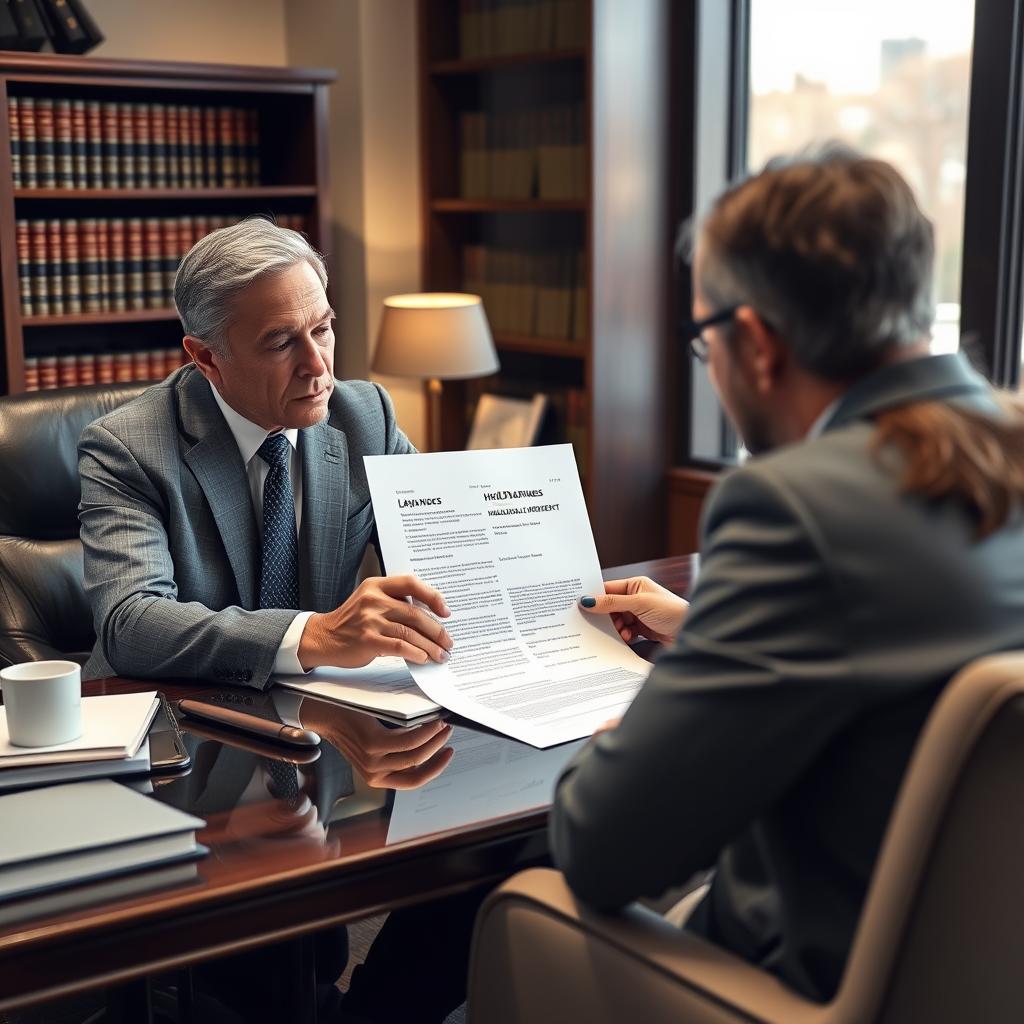
Hold Harmless Agreement Lawyer Washington DC, DC
Hold harmless agreements, also known as indemnity agreements, allocate risk between parties to a contract. In Washington, D.C., these agreements are interpreted and enforced under District of Columbia contract law and the D.C. Uniform Commercial Code. When a party bound by a hold harmless provision refuses to honor its obligations, the other side may seek compensation for resulting losses. D.C. Superior Court’s Civil Division hears contract disputes, and the statutory deadline to file a written-contract claim is three years (D.C. Code § 12‑301(7)). For claims within the small-claims monetary limit, the Small Claims and Conciliation Branch provides a streamlined path; larger disputes proceed in the Civil Actions Branch.
Law Offices Of SRIS, P.C., founded in 1997, represents clients in hold harmless agreement matters throughout D.C. From its Arlington, Virginia location—just minutes from the courthouse at 500 Indiana Avenue NW. Mr. Sris, Owner and Founder, handles contract law disputes together with his Of Counsel, drawing on over 120 years of combined legal experience and 4,739+ documented firm-wide results. Results may vary. To request a consultation, reach our location at (888) 437‑7747. Law Offices Of SRIS, P.C. — Advocacy Without Borders.
What Hold Harmless Agreements Mean in Washington, D.C.
In D.C. Commercial practice, a hold harmless clause obligates one party to assume another’s liability arising from specified risks—construction defects, equipment use, service performance, or third‑party claims. The D.C. Superior Court enforces such clauses as written unless they contravene public policy or result from fraud, duress, or mutual mistake. The court applies standard contract‑interpretation rules: the plain language of the agreement controls, and ambiguous terms may be construed against the drafter.
When a dispute cannot be resolved informally, the matter may be filed in the Civil Division of D.C. Superior Court. Small claims (up to the small-claims limit) are heard in the Small Claims and Conciliation Branch; any claim exceeding that amount proceeds in the Civil Actions Branch, where parties engage in discovery, motion practice, and possibly a bench or jury trial. D.C. Courts also offer court‑annexed mediation in many contract cases, which can lead to early resolution without the cost and time of trial. The applicable statute of limitations for a written contract action in D.C. Is three years from the date of breach (D.C. Code § 12‑301(7)), making prompt legal evaluation important.
How Mr. Sris and His Of Counsel Handle Hold Harmless Agreement Cases
Mr. Sris and his Of Counsel approach hold harmless agreement disputes by first reviewing the contract’s language, the factual history of performance or breach, and the damages claimed. They identify whether an indemnification duty was triggered and assess the defenses available—such as lack of notice, scope limitations, or unenforceable penalty provisions. Where informal negotiation is possible, they work to reach a cost‑effective resolution without litigation.
If litigation becomes necessary, they prepare the complaint, attend all court appearances at D.C. Superior Court, and present the case through discovery, motion practice, and trial if needed. Because the firm operates from its Arlington location within 4.5 miles of 500 Indiana Avenue NW, clients benefit from timely filings and appearances at Judiciary Square. Throughout the process, Mr. Sris and his Of Counsel keep the client informed about case developments, court‑scheduling factors, and settlement opportunities. Results may vary. Based on the specific facts of each matter.
About Mr. Sris and His Of Counsel Team
Mr. Sris, Owner and Founder of Law Offices Of SRIS, P.C., has been practicing since 1997. He is admitted in Virginia, Maryland, the District of Columbia, New Jersey, and New York, and his background in accounting and information systems gives him added perspective in financial and contract‑driven matters. Mr. Sris testified before the Virginia House Courts of Justice Committee in support of 2019 HB 635 (chief patron Del. David Bulova), and his experience as a former prosecutor contributes to his disciplined approach in civil litigation.
Every attorney working with Mr. Sris serves as Of Counsel—there are no associates or junior lawyers. Mr. Sris and his Of Counsel bring over 120 years of combined legal experience and 4,739+ documented firm-wide results, handling contract law issues including hold harmless and indemnity disputes. Results may vary. The firm’s multi‑state presence means it can assist clients whose contracts cross jurisdictional lines.
Frequently Asked Questions
What is a hold harmless agreement?
A hold harmless agreement is a contract provision in which one party agrees to protect another from legal liability arising from a specific activity or transaction. In practice, it shifts financial responsibility for certain losses—such as property damage, personal injury, or third‑party claims—from the indemnified party to the indemnitor. These clauses appear in construction contracts, service agreements, leases, and business deals. Courts in the District of Columbia enforce such terms if the language is clear and the clause does not violate public policy. The strength of the provision depends heavily on the precise wording, which is why careful drafting and review by experienced counsel matters.
Do I need a lawyer for a hold harmless agreement dispute in D.C.?
While you are not required to have a lawyer to pursue a contract claim in D.C., hiring experienced counsel can help you navigate procedural rules, evidentiary requirements, and negotiation strategies. D.C. Superior Court’s Civil Division follows formal rules of procedure, and a misstep—such as missing the three‑year statute of limitations or failing to adequately plead damages—can jeopardize your case. An attorney can evaluate the enforceability of the hold harmless clause, gather evidence, and represent you in mediation or at trial. Matters that involve substantial sums or complex indemnity obligations particularly benefit from legal guidance.
How long do I have to file a breach of contract claim involving a hold harmless agreement in D.C.?
A written contract claim in the District of Columbia generally must be filed within three years of the breach. This period is set by D.C. Code § 12‑301(7). If the hold harmless agreement is oral, the same three‑year period applies under the catch‑all contract provision. Because the clock begins to run when the breach occurs—not when the damages become apparent—it is important to act quickly. An attorney can help determine the exact accrual date and any circumstances that may toll or shorten the deadline.
Can I use small claims court for a hold harmless agreement dispute in D.C.?
Yes, if the amount you are suing for is within the small-claims jurisdictional limit, you may file in the D.C. Small Claims and Conciliation Branch. This branch of the Superior Court handles money‑only claims without formal discovery, and litigants often appear without attorneys. However, if your claim exceeds the small-claims jurisdictional limit, or if you need injunctive relief or other equitable remedies, the case must be filed in the Civil Actions Branch. Mr. Sris and his Of Counsel can advise whether small claims is appropriate for your particular hold harmless agreement dispute and help prepare the necessary filings.
How does mediation work in D.C. Contract disputes?
D.C. Superior Court encourages or requires mediation in many contract cases through its Multi‑Door Dispute Resolution Division. A neutral mediator helps the parties discuss settlement terms and evaluate the strengths and weaknesses of their positions. Mediation is confidential, less formal than trial, and often results in a resolution that both sides find acceptable. If mediation succeeds, the case can be resolved without a trial; if not, the parties proceed through the litigation process. Mr. Sris and his Of Counsel frequently participate in court‑ordered and voluntary mediation to seek cost‑effective outcomes for clients.
What happens if a hold harmless agreement is determined to be unenforceable in D.C.?
If a D.C. Court finds a hold harmless clause unenforceable—because it is unconscionable, against public policy, or procured by fraud—the clause is void and the indemnitor is not obligated to pay. The rest of the contract may remain valid if it can be severed from the unenforceable provision. The outcome depends heavily on the specific facts and the wording of the agreement. An experienced contract lawyer can assess whether a challenge to enforceability is likely to succeed before litigation begins.
For guidance on your specific situation, reach Law Offices Of SRIS, P.C. at (888) 437‑7747.
Related practice areas: Contract Lawyer Georgetown DC · Contract Lawyer Spring Valley DC · Contract Lawyer Cleveland Park DC · Contract Lawyer Chevy Chase DC · Contract Lawyer American University Park DC
Attorney advertising. Prior results do not guarantee a similar outcome.
Case results depend on a variety of factors unique to each case.
Results may vary.