
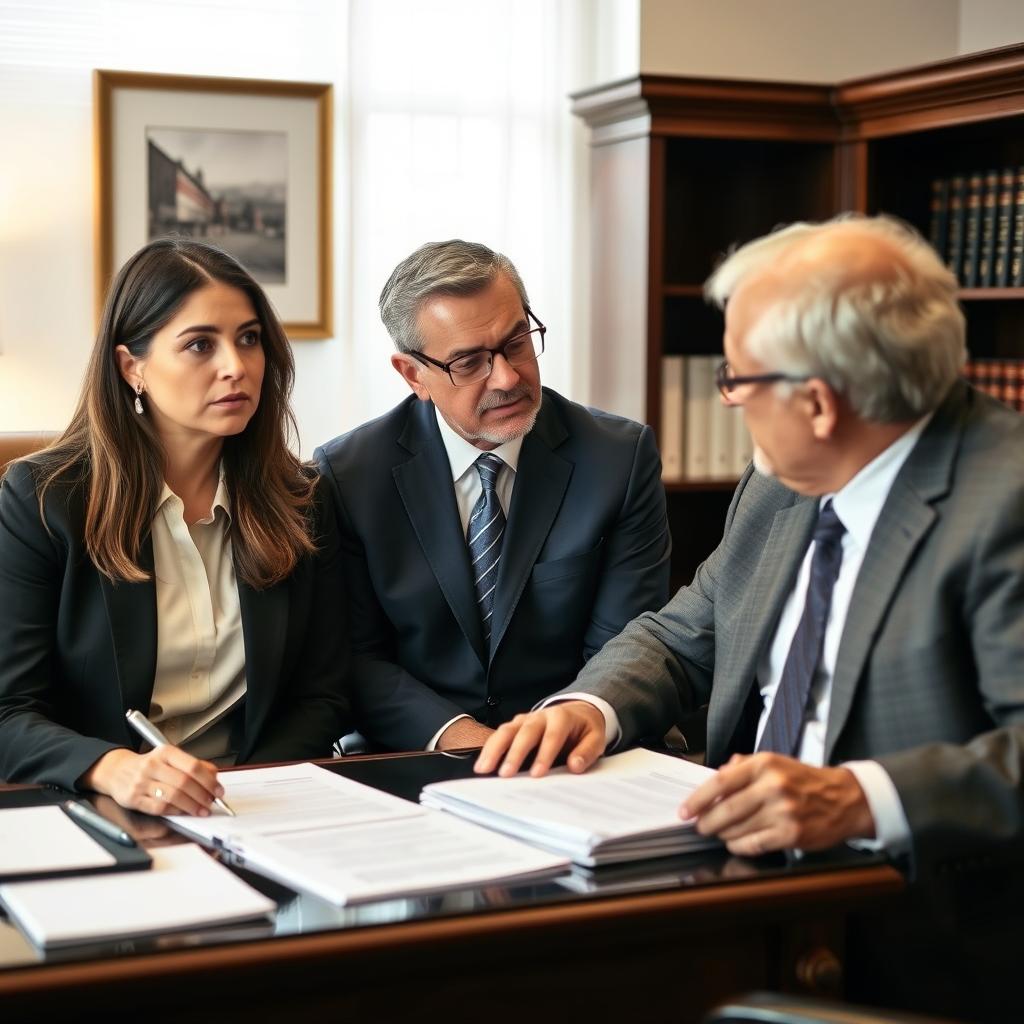
Licensing Lawyer Virginia, VA
You developed a proprietary inventory-tracking software and licensed it to a Virginia-based logistics company. The agreement called for monthly royalty payments and strict limits on how the software could be used. For a year, the payments came on time. Then they stopped. Worse, you learned the company had given your code to a competitor to build a parallel system — claiming the license allowed it. You need to enforce your rights, stop the misuse, and recover what your work is worth. Licensing agreements are contracts, and Virginia contract law governs what happens when one side breaks its word. At Law Offices Of SRIS, P.C., our licensing lawyers in Virginia help clients enforce, defend, and restructure licensing agreements, from software and manufacturing to brand distribution and patent licensing. Whether the dispute is in Fairfax County Circuit Court, the U.S. District Court for the Eastern District of Virginia, or resolved through negotiation before a filing becomes necessary, Mr. Sris and his Of Counsel work to protect your intellectual property and the business you built around it. Don’t let a broken deal threaten your livelihood. To discuss your licensing matter, reach our location at (888) 437‑7747. Law Offices Of SRIS, P.C. — Advocacy Without Borders.
What Licensing Disputes Mean in Virginia
A licensing agreement is a contract — nothing more, nothing less. That means any dispute over royalties, territory, scope of use, exclusivity, sublicensing, or termination is analyzed as a contract claim under Virginia law. Virginia courts enforce contracts as they are written, applying the parol evidence rule strictly: the document itself controls, and outside statements usually cannot alter it. For trade-secret license violations, the Virginia Uniform Trade Secrets Act ( et seq.) also applies, providing injunctions and the possibility of damages for willful misappropriation.
Common licensing disputes in Virginia include the licensee exceeding the scope of the grant — such as using software beyond the licensed number of users or manufacturing outside the permitted territory — failure to pay royalties, improper sublicensing without consent, and disclosure of confidential technical information. Virginia courts can grant a range of remedies: monetary damages for lost royalties and profits, specific performance to compel delivery of the licensed product, and injunctions to stop continued misuse. The chosen remedy turns on the exact contract language and the nature of the breach. Because Virginia courts treat contracts strictly, even a drafting ambiguity can become a decisive issue, making early legal review of the licensing instrument essential.
How Mr. Sris and His Of Counsel Handle Licensing Cases
When a licensing dispute comes to us, the first step is a thorough review of the agreement — not just the royalty clause, but the entire warranty, indemnity, limitation-of-liability, and termination sections. We map the contract’s actual text against the performance the client says was promised. Many licensing disagreements are resolved without court intervention: a sharply worded demand letter citing specific Virginia statutory provisions and case law often persuades the other side to comply. If the breach continues, we explore alternative dispute resolution if the contract calls for it, and when necessary, file a complaint in the appropriate Virginia court — General District Court for claims up to , or Circuit Court for larger disputes.
Once litigation begins, we handle discovery, motions practice, and trial preparation with the same attention to detail. Mr. Sris and his Of Counsel are experienced in Virginia civil practice — from managing e-discovery involving complex technical evidence to presenting damages calculations that withstand scrutiny. The goal is always to achieve the trusted practical outcome for the client, whether that means recovering lost royalties through a settlement, obtaining an injunction stopping further misuse, or, when the facts warrant, taking the case to a verdict. Throughout the process, we keep you informed, so you understand each strategic choice and the associated risks.
About Mr. Sris and His Of Counsel Team
Mr. Sris, Owner and Founder of Law Offices Of SRIS, P.C., has practiced law since 1997 and is admitted in Virginia, Maryland, the District of Columbia, New Jersey, and New York. A former prosecutor, he brings trial experience to civil licensing disputes, understanding how to build a case from evidence and present it persuasively. Mr. Sris testified before the Virginia House Courts of Justice Committee in support of 2019 HB 635 (chief patron Del. David Bulova), a bill that revised Virginia’s equitable distribution statute — reflecting a record of engagement with Virginia lawmaking.
Mr. Sris and his Of Counsel bring over 120 years of combined legal experience. Results may vary. They have documented 4,739+ case results across all practice areas since 1997. When you hire our firm, you gain access to a team that can analyze contracts, identify leverage points, and pursue your objectives in Virginia courts. Your licensing dispute will be handled by attorneys who concentrate on contract law and who appear regularly in Virginia’s circuit and federal courts.
Frequently Asked Questions
What is a licensing agreement under Virginia law?
A licensing agreement is a contract that grants the right to use intellectual property, governed by Virginia’s contract and trade secrets laws. Virginia enforces these agreements as written, applying standard contract principles. If the license involves trade secrets, the Virginia Uniform Trade Secrets Act ( et seq.) also applies, offering additional protections for confidential business information. The agreement must be clear about the scope of use, duration, royalties, and termination rights. Any ambiguity can lead to litigation, so we recommend having an attorney review the terms before signing.
What should I do if someone breaches a licensing agreement in Virginia?
Gather all contract documents and correspondence, then consult an experienced contract lawyer to assess your remedies under Virginia law. Do not ignore the breach, as delay can harm your legal position — for example, by allowing the other side to claim you waived the right to enforce. An attorney can send a demand letter, which often resolves the matter without court. If not, litigation or alternative dispute resolution may follow, with the goal of recovering royalties, obtaining an injunction, or enforcing specific performance.
How are licensing disputes resolved in Virginia courts?
They are litigated like breach of contract claims, with courts able to award damages, specific performance, or injunctive relief. Depending on the amount in controversy, the case may be filed in General District Court (up to ) or Circuit Court (above ). Virginia courts apply the parol evidence rule strictly, so the written contract itself is the primary evidence. Discovery, motions practice, and, if necessary, trial will follow. Many licensing cases settle before trial once each side understands the evidence and the legal strengths and weaknesses.
Can a Virginia court order specific performance for a licensing agreement?
Yes, Virginia courts may order specific performance when monetary damages are inadequate, especially for unique intellectual property. For example, if a licensor refuses to deliver the source code that is essential to your business, a court can compel delivery because the technology is not readily available elsewhere. Specific performance is not automatic; you must show that the contract terms are clear and that money cannot fully compensate you.
Do I need a lawyer for a licensing dispute in Virginia?
While you can represent yourself, licensing disputes involve complex contract analysis and high-value intellectual property; having an experienced attorney helps protect your rights. A lawyer can interpret contract language under Virginia law, calculate damages accurately, preserve evidence, and handle negotiations or litigation. Without representation, you risk accepting a one-sided settlement or losing the opportunity for an injunction that could stop further misuse of your IP. Most licensing disputes are won or lost on the precise wording of the contract — something an attorney can navigate effectively.
What is the statute of limitations for licensing disputes in Virginia?
For a written licensing contract, the statute of limitations is five years; for an oral agreement, it is three years, per . The clock starts when the breach occurs. Because licensing disputes can be factually complex, it is important to contact an attorney well before the deadline to allow time to investigate, send a demand letter, and prepare a complaint if needed. Missing the statute of limitations can bar your claim entirely.
Explore related Virginia contract topics: Virginia Contract Lawyer · Virginia Breach of Contract Lawyer · Virginia Service Contract Lawyer · Virginia Business Contract Lawyer · Fairfax Contract Lawyer.
Primary Virginia resources: Virginia Uniform Commercial Code (Title 8.1A) · Virginia Courts · Virginia Civil Procedure (Title 8.01).
Attorney advertising. Prior results do not guarantee a similar outcome.
Results may vary.
Case results depend on a variety of factors unique to each case.